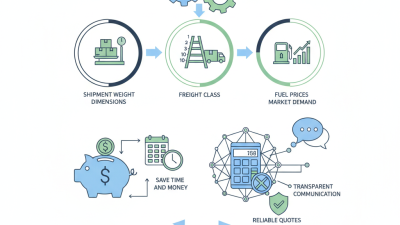
Getting an accurate ltl quote for global shipping requires more than entering a destination and cargo weight. Small details can change the final price. A pallet measuring 48 by 40 inches may fit one network’s limits but trigger a surcharge elsewhere. Density, freight class, packaging, pickup access, delivery equipment, and border requirements all matter.
Chris Caplice, Executive Director of MIT’s Center for Transportation and Logistics, has emphasized, “Data quality drives transportation decisions.” That principle applies directly to every ltl quote. Provide precise dimensions, verified weight, commodity descriptions, pallet counts, and stackability details. Add the correct pickup and delivery addresses. A residential location, liftgate request, limited-access site, or scheduled appointment can alter the estimate significantly.
Details matter most.
Global shipments also need careful timing. Compare the quoted transit time with the actual sailing schedule, terminal handling, currency, fuel adjustments, and destination charges. Ask whether the price includes customs-related services, documentation, insurance, and delivery appointments. These items may not appear clearly in a basic quote.
Experienced shippers review old invoices before accepting a new rate. They check whether accessorial fees were predictable or surprising. That step is easy to skip, and sometimes it exposes inconsistent carrier data. Online calculators are useful, but they are not perfect. A human review can catch an incorrect freight class or a missing residential surcharge.
The most reliable ltl quote is transparent, itemized, and based on shipment facts. It should also explain what may change. Rates move. Information gets missed. Careful verification remains the safer habit.

A reliable LTL quote starts with complete shipment details, not a rough guess. Provide the pickup and delivery addresses, including postal codes and contact information. State whether each location has a loading dock, forklift, liftgate, appointment requirement, or residential access. These details can change the final charge.
Measure every pallet after packaging. Record length, width, height, total weight, pallet count, and stackability. Mention fragile packaging, unusual shapes, or items that cannot be turned. Use actual scale readings when possible. Estimated weights often create reclassification fees later. That mistake is easy to make.
Describe the goods clearly and use the correct freight classification. Include the commercial invoice, packing list, and any required shipping references for the international route. For global movements, identify the port or airport leg, delivery terms, and customs responsibility. Keep descriptions consistent across documents. A mismatch can delay clearance or trigger manual review.
Ask the provider to confirm fuel charges, accessorial fees, transit assumptions, and quote validity. Photos of pallets can help resolve uncertain dimensions. I would still recheck them before dispatch. A neat spreadsheet is useful, but it cannot replace physical verification. Small omissions, such as a liftgate request, may matter more than expected.
An accurate LTL quote begins with verified shipment data, not a rough estimate. Freight classification depends heavily on density, handling, stowability, and liability. Measure the packed shipment, not the product alone. Record length, width, height, and actual scale weight. One incorrect inch can change the calculated density and classification.
Use the same units throughout the quote request. For multiple pallets, list each footprint separately. Include overhangs, stackability, and whether the freight needs special handling. The 2024 State of Logistics Report estimated United States business logistics costs at $2.3 trillion in 2023, equal to about 8.7% of economic output. Small data errors can therefore create expensive downstream adjustments. I have seen teams trust old measurements too quickly.
Packaging deserves equal attention. A crushed corner, weak stretch wrap, or uneven pallet can affect handling risk and accessorial charges. Use a rigid pallet, secure cartons tightly, protect exposed edges, and leave labels visible. Photograph the finished shipment before pickup. The 2023 Logistics Performance Index assessed logistics performance across 139 economies, highlighting tracking and shipment reliability as critical supply-chain factors. Good records support both. Still, packaging rules vary by carrier and lane, so a checklist is not enough. Confirm the final dimensions, weight, class, and packaging details shortly before booking.
An accurate LTL quote begins with realistic shipment details. Provide pallet count, dimensions, weight, pickup location, delivery address, and cargo description. Small errors can change the freight class, equipment requirement, or final charge. I have seen a shipment quoted cheaply because one pallet dimension was entered incorrectly. The invoice later told a different story.
Compare carrier coverage across every required lane, not only the first and final cities. Some providers offer strong regional networks but limited international connections. Check terminal access, cross-border experience, delivery-area surcharges, and transfer points. Then compare transit times carefully. A four-day estimate may exclude customs processing, weekends, or remote-area handling. Ask whether the schedule is guaranteed or simply historical. It matters.
Tips: Request itemized quotes from several qualified providers. Compare base rates, fuel adjustments, accessorial fees, pickup windows, tracking quality, and claims procedures. Review service options such as liftgate delivery, appointment scheduling, residential handling, and time-definite transport. Confirm documentation requirements before booking. A faster option may reduce storage costs, but it can also cost more than the cargo justifies. I sometimes focus too heavily on price; that is a mistake when missed delivery windows affect production. Keep the comparison spreadsheet simple, and record every assumption.
The figures below are practical planning ranges for non-hazardous LTL freight. Actual pricing and transit times depend on the origin, destination, freight classification, dimensions, accessorial services, customs requirements, and seasonal capacity.
| Service Coverage | Typical Shipment Profile | Typical Transit Time | Available Service Options | Main Quote Inputs | Common Cost Drivers | Best Use Case |
|---|---|---|---|---|---|---|
| Regional domestic LTL | 1–12 pallets; generally under full-truckload volume | 1–3 business days within a defined service region | Standard dock delivery, residential delivery, liftgate, appointment delivery, limited-access delivery | Origin and destination postal codes, pallet count, dimensions, weight, freight class, pickup date | Short-haul minimum charges, reclassification, fuel surcharge, extra handling, delivery appointments | Cost-sensitive shipments moving within one country or nearby region |
| National domestic LTL | 1–20 pallets; mixed freight moving between major distribution areas | 2–7 business days, depending on lane length and terminal transfers | Standard, expedited, guaranteed delivery where available, inside delivery, liftgate, appointment delivery | Complete ship-to and ship-from details, freight class or density, packaging type, declared value, accessorial needs | Linehaul distance, terminal handling, fuel, residential or limited-access locations, oversize dimensions | Regular domestic replenishment, wholesale distribution, and multi-pallet orders |
| Cross-border LTL | Palletized freight crossing an international land border | 3–10 business days, excluding customs delays | Door-to-door transport, customs brokerage, bonded movement, appointment delivery, border documentation support | Commercial invoice, packing list, tariff or harmonized code, country of origin, tax identifiers, customs value | Brokerage, duties and taxes, border fees, currency adjustments, documentation errors, inspection delays | Predictable trade lanes where the shipper can provide complete customs information |
| Port or airport transfer plus LTL | Imported or exported pallets requiring local collection or final delivery | 1–5 business days after freight is released; port dwell is additional | Drayage coordination, terminal pickup, transloading, warehouse delivery, appointment scheduling | Release status, terminal location, container or shipment reference, pallet details, delivery appointment requirements | Demurrage, detention, storage, chassis fees, congestion, transloading, appointment changes | Freight moving between an international gateway and a warehouse or consignee |
| International ocean-consolidated LTL | Pallets or cartons too large for parcel but not enough for a full container | Approximately 4–10 weeks door-to-door, depending on route and customs | Origin pickup, consolidation, ocean transport, destination deconsolidation, customs brokerage, final-mile delivery | Cargo-ready date, port pair, cubic volume, gross weight, packaging, commodity description, customs documents | Ocean freight, consolidation and deconsolidation, terminal handling, documentation, duties, destination delivery | Lower-cost international shipping when transit time is less critical than transport economy |
| International air-consolidated LTL | Time-sensitive pallets or cartons with higher value or urgent replenishment needs | 3–10 business days airport-to-airport; door-to-door timing is longer | Priority uplift, airport handling, customs brokerage, delivery appointment, limited tracking milestones | Chargeable weight, actual weight, dimensions, airport pair, commodity, declared value, ready time | Chargeable volume, security screening, fuel and security surcharges, customs, special handling | Urgent international freight that cannot reasonably move by ocean |
| Expedited or guaranteed LTL | Critical domestic or cross-border freight with a required delivery date | Same day to 3 business days, depending on lane and guarantee terms | Priority handling, time-definite delivery, appointment delivery, shipment visibility, proactive exception alerts | Required delivery date and time, pickup cutoff, shipment details, service-area eligibility, contact information | Premium linehaul, after-hours pickup, weekend delivery, reconsignment, guarantee exclusions | Production interruptions, stockouts, project cargo, or contractual delivery commitments |
| Special-handling LTL | Fragile, high-value, oversized, temperature-sensitive, or regulated freight | Typically 1–10 business days, depending on handling and compliance requirements | White-glove delivery, inside placement, temperature control, limited-access delivery, appointment and inspection support | Commodity details, packaging, dimensions, weight, handling instructions, insurance value, permits, regulatory documents | Special equipment, extra labor, protective packaging, permits, liability limits, storage, rehandling | Shipments where damage prevention, compliance, or final-mile handling is more important than the lowest rate |
An accurate LTL quote begins with precise shipment details. Record each pallet’s length, width, height, weight, and stackability. Add the pickup and delivery addresses, including postal codes. A warehouse entrance is different from a residential driveway. Small details matter.
Accessorial fees can change the final price quickly. Liftgate service, appointment delivery, limited-access locations, inside delivery, and reweigh charges are common examples. Describe the site honestly. A delivery point without a loading dock may require special equipment. Also confirm whether the carrier charges for waiting time. These fees are easy to overlook.
Fuel surcharges usually depend on the base transportation rate and current fuel conditions. Ask how the surcharge is calculated, rather than accepting a vague percentage. Customs costs require equal care. Provide the correct product description, tariff classification, country of origin, commercial value, and shipping terms. Duties, import taxes, brokerage charges, inspection fees, and storage costs may apply. The importer often remains responsible for unpaid charges, even when another party arranged transportation.
I recheck dimensions before booking.
Quotes are estimates, not guarantees. Weight changes after packaging, and customs authorities may question unclear descriptions. I have found that a measured pallet and a complete invoice prevent more disputes than a hurried low quote. Keep photos, packing records, and written confirmations for each shipment.
Reviewing the final global LTL quote requires more than checking the total price. Confirm the shipment’s weight, dimensions, freight class, pickup location, destination, and delivery terms. A small measurement error can change the chargeable weight and trigger a reclassification fee.
The 2024 State of Logistics Report recorded United States business logistics costs at about 2.3 trillion dollars in 2023, equal to 8.7% of GDP. This pressure makes quote accuracy important.
Ask the carrier to separate linehaul, fuel, terminal handling, documentation, and delivery charges. Check currency, exchange-rate assumptions, validity dates, and possible residential or limited-access fees. I have found that vague “estimated accessorials” deserve careful questioning. They are easy to overlook.
Tips: Compare the quoted transit time with the service level. Confirm whether tracking events cover every handoff. Match the commercial invoice, packing list, pallet count, and declared dimensions before approval.
The World Bank’s 2023 Logistics Performance Index also shows that customs and infrastructure remain major differences between trade lanes. Therefore, request written confirmation of document requirements and destination charges.
Do not approve a quote only because it is the cheapest. A lower initial rate may hide extra handling or storage costs. I still recheck cubic measurements manually; spreadsheet formulas are useful, but not infallible.
Fax: (920) 793-3818