Top 10 Benefits of Air Freight Shipping for Your Business Needs?
In today's fast-paced business environment, air freight shipping has become a pivotal aspect for many companies looking to grow. This method offers numerous advantages that can significantly enhance efficiency and reduce delivery times. Imagine needing to get products across the globe in just a matter of days. Air freight shipping makes this possible.
However, it’s essential to recognize that air freight shipping isn’t always the right fit for every business. Costs can be high for small shipments. Many businesses also struggle with packaging requirements for air transport. These factors can lead to challenges that require careful consideration. Nevertheless, the benefits often outweigh these concerns.
Companies that embrace air freight shipping can experience improved inventory management and customer satisfaction. Faster delivery can set a business apart from its competitors. Additionally, air freight offers reliability, ensuring that goods arrive on time. In an age of immediacy, this advantage can be critical. Ultimately, exploring air freight shipping can unlock significant potential for growth and efficiency.
Understanding Air Freight Shipping and Its Importance for Businesses
Air freight is a vital logistics option for many businesses. It provides speed, reliability, and global reach. Companies can move goods quickly across long distances. This is especially important for perishable items or high-demand products. Moreover, air freight can enhance customer satisfaction by ensuring timely deliveries.
When considering air freight, think about your specific needs. Evaluate the urgency of your shipments. If timing is crucial, air freight may be the best choice. However, it can be more expensive than other methods. It’s important to balance speed and cost. Sometimes, businesses choose air freight for smaller quantities to meet immediate demands.
Tip: Keep track of your shipping costs. Understanding the pricing structure will help you make better decisions. Regularly review which shipments truly need air freight. This can save you money and resources over time.
Furthermore, assess the cargo types that require air transport. Not all products are suited for air freight. Fragile items might need special handling. Evaluate whether air freight aligns with your overall business strategy. Make well-informed choices to optimize your logistics.
Top 10 Benefits of Air Freight Shipping for Your Business Needs
Speed and Reliability: Key Advantages of Air Freight for Time-Sensitive Goods
Air freight shipping offers unmatched speed and reliability, crucial for time-sensitive goods. When a product needs to reach its destination quickly, air transport is often the best choice. Delivery times can be as short as one day, outpacing ground or sea options significantly. This rapid service helps businesses meet tight deadlines and customer demands.
However, relying solely on air freight can be costly. Businesses must weigh the immediate benefits against potential expenses. It's essential to ensure that the shipment truly warrants this premium service. Additionally, logistical challenges, such as airport delays, can sometimes disrupt schedules.
The advantages of air freight extend beyond speed. It ensures higher security for goods, as air transport facilities often have strict regulations. Yet, businesses should consider if the products shipped in this way justify the added measures. Effective planning and market analysis can help streamline air freight processes, but many companies may still encounter unforeseen challenges.
Cost Considerations: Evaluating Air Freight vs. Other Shipping Methods
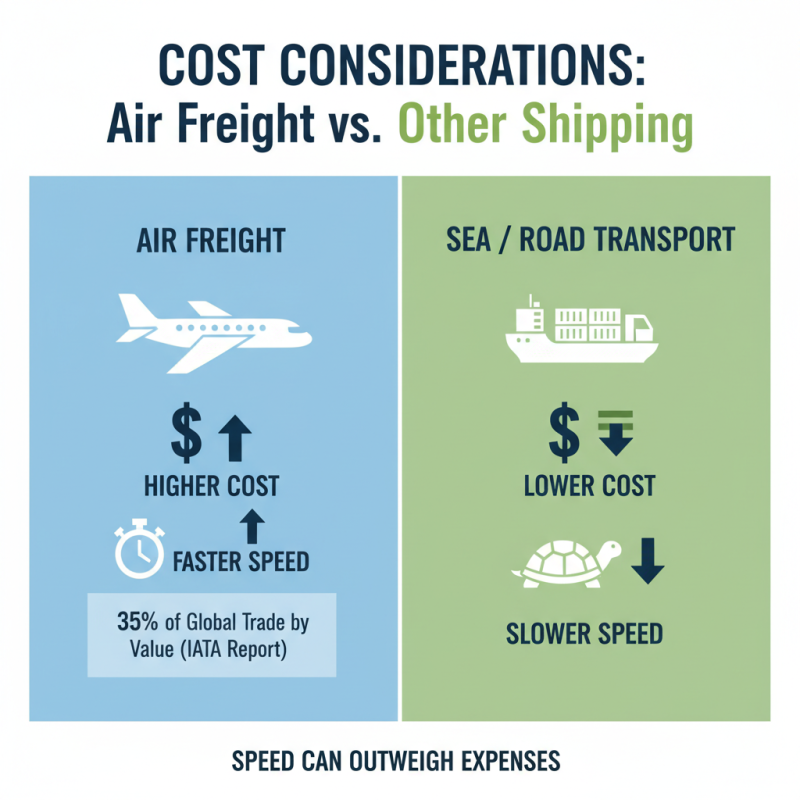
When evaluating shipping options, air freight is often viewed as costly. Yet, its speed can outweigh expenses. According to a report by IATA, air freight accounts for about 35% of global trade by value. This statistic highlights its importance despite higher costs compared to sea or road transport.
For businesses facing time-sensitive delivery, air freight delivers unmatched speed. The average shipping time is significantly reduced. However, costs can run three to five times higher than sea freight for similar weights. Additionally, factors like fuel prices can impact costs. With fluctuations in global fuel costs, air freight rates can be unpredictable.
Analyzing your specific needs is vital. If your products are perishable or high-value, air freight is worth the expense. On the other hand, businesses can find cost-effective alternatives in ocean freight. It may take longer, but lower costs can lead to better margins, especially for larger shipments. Balancing speed with budget constraints could reveal insights into your shipping strategy.
Enhanced Security Measures in Air Freight Shipping for Valuable Cargo
Air freight shipping offers enhanced security measures that make it a preferred choice for valuable cargo. A report from the International Air Transport Association (IATA) states that air cargo is 6 times more secure than ocean freight. This is largely due to the strict access controls at airports and around cargo facilities.
Security screenings occur at multiple points. These include when the cargo is checked in, loaded, and unloaded.
Moreover, global air freight networks utilize advanced tracking technologies. GPS and RFID systems provide real-time monitoring. This means businesses can pinpoint the location of their cargo at any given time. According to a study by the World Bank, timely access to information can reduce loss rates by up to 25%. While many carriers invest heavily in security, there is still room for improvement. Not all airports are equipped equally, leading to inconsistent standards.
Security audits and compliance training for personnel are crucial. However, human error can still introduce vulnerabilities. Frequent evaluations are necessary for maintaining and enhancing security protocols. Companies must stay vigilant and proactive about these challenges. Investing in comprehensive insurance might also mitigate potential losses. The stakes are high, and ensuring the security of valuable cargo should be a top priority for all businesses involved in air freight.
Environmental Impact: Exploring Sustainable Practices in Air Freight运输
Air freight shipping has a significant environmental impact. It's often seen as a fast solution for urgent deliveries. However, it has a larger carbon footprint than other modes of transport. Many companies are now focusing on sustainable practices to mitigate this effect.
One approach involves using more fuel-efficient aircraft. These planes consume less fuel and emit fewer pollutants. Companies are also engaging in carbon offsetting programs. This allows them to invest in projects that reduce greenhouse gases. Innovative technologies, such as biofuels, are being explored as viable alternatives. These steps show promise but still require widespread adoption.
There's ongoing debate about the efficiency of these practices. Are they enough to balance the impact? Continuous improvement is essential. Businesses must assess their shipping choices critically. Engaging with customers about sustainability is crucial too. Sharing progress can enhance brand loyalty and reflect a commitment to the environment.