
Choosing the right Cool Boxes in 2026 depends on more than color, capacity, or online ratings. Daily use reveals the real differences.
A dependable cool box should match your journey. A small insulated box may suit office lunches and short drives. A wheeled model can help families carrying drinks across a campsite. Soft coolers are easier to store, but their insulation may weaken after heavy use. Hard coolers usually offer stronger protection and steadier temperatures. However, they can be bulky in a crowded car.
Material quality matters. Look for thick insulation, secure seals, sturdy hinges, and comfortable handles. A clean interior is important when storing fresh food. Some electric models use vehicle power, while others rely on ice packs. Each option has limits. Power can fail, and ice eventually melts. Simple details still matter.
Check the drainage plug.
Good testing should reflect real experience, not only manufacturer claims. Compare cooling duration, usable space, carrying comfort, cleaning effort, and performance in warm weather. A box that holds ice for several days may still waste space around awkward corners. That point is easy to miss. I would also question impressive capacity numbers, because advertised volume may include unusable areas.
This guide examines practical Cool Boxes for road trips, picnics, workdays, fishing, and camping. It considers independent testing principles, user feedback, and established design features. No single model is perfect. The best choice balances insulation, portability, durability, budget, and personal habits.
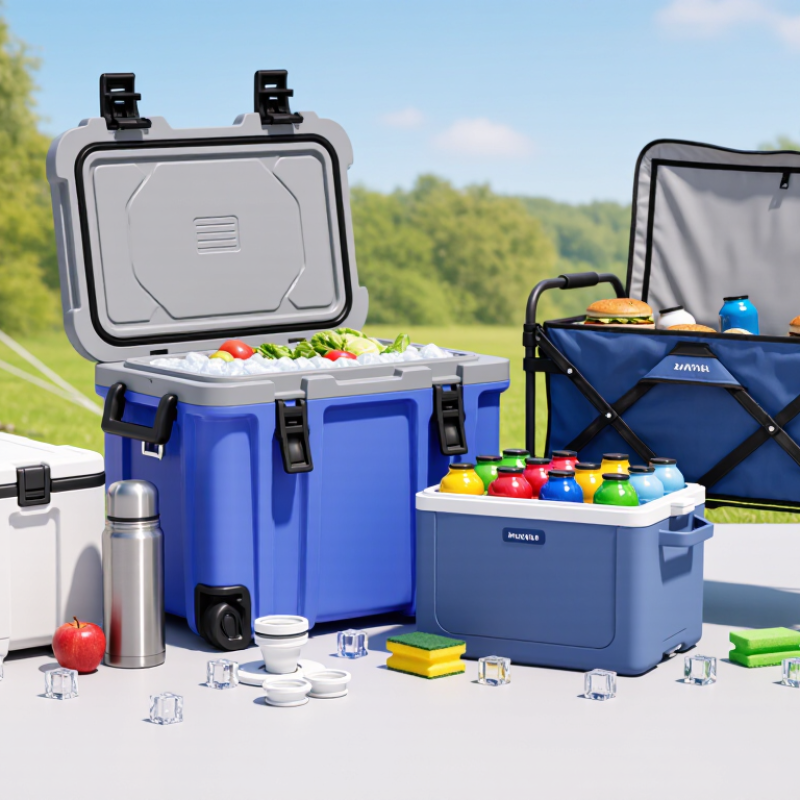
A cool box works by slowing heat transfer, not by creating cold. Its insulated walls trap air inside foam, while the outer shell blocks sunlight and warm air. A tight lid seal matters just as much. Every opening allows heat to enter.
That is the whole trick.
Hard-sided cool boxes usually hold temperature longer because their thick walls resist pressure and heat. Soft-sided versions are lighter and easier to carry, but their insulation is often thinner. Electric models can provide active cooling, although they need a reliable power source and careful ventilation. The best type depends on travel time, available space, and how often the lid opens.
I once packed drinks before cooling the container itself. The ice melted quickly, and I blamed the box too soon. Pre-chilling the interior, food, and drinks makes a noticeable difference. Use frozen packs around the contents, leave fewer empty gaps, and keep the box in shade. A small thermometer gives better evidence than touch. Contents may feel cold while the center remains too warm. Check the lid gasket for cracks, and avoid placing warm items inside. Performance also changes with weather, loading habits, and insulation wear. Some published capacity claims seem optimistic, so real use matters more than a number on a label.
Hard-shell cool boxes remain the strongest choice for long trips, outdoor work, and crowded family camps. Their rigid walls resist knocks, uneven ground, and accidental pressure from other equipment. Thick insulation also slows heat transfer better than thin soft bags. However, strength adds weight. An empty box can already feel inconvenient before food and ice are added. Capacity matters, but usable space matters more. Wide openings make it easier to separate raw food, drinks, and small containers.
The USDA Food Safety and Inspection Service advises keeping perishable food at 40°F (4°C) or below. That target is practical, not decorative. A well-sealed lid, dense insulation, and limited opening time help maintain it. In my experience, pre-chilling the box overnight works better than adding warm food immediately. I still overpack sometimes. That reduces airflow and weakens cooling performance. Long-term cooling also depends on ice placement, outdoor temperature, and direct sunlight. Laboratory claims may not match a windy beach or a hot vehicle.
Tips: Choose a drain plug for faster cleaning. Check the lid gasket for even contact. Pack frozen items low and delicate food above them. Keep the box shaded with a light-colored cover. Leave some space for cold air circulation. The International Association for Food Protection supports temperature control as a core food-safety practice, yet real users often forget a simple thermometer. Use one. It exposes cooling problems before lunch becomes waste.
Soft-sided cool bags suit commuters, picnickers, and short outdoor trips. They compress after use and fit beside a backpack or under a car seat. That flexibility matters as outdoor participation expands. The Outdoor Industry Association’s 2024 report recorded 175.8 million U.S. participants in outdoor recreation during 2023.
In daily use, look for dense insulation, a leak-resistant lining, and wide zippers. A shoulder strap helps on crowded trains. Exterior pockets keep napkins and utensils away from chilled food. It folds flat. That saves space.
Capacity claims need caution. A bag advertised for 12 litres may hold less after ice packs and rigid containers are added. Test it with a lunch box before relying on it. The U.S. Department of Agriculture advises keeping perishable food at 40°F or below, and discarding it after two hours above that temperature. In heat above 90°F, the limit falls to one hour. Soft walls can lose cold quickly when opened often. I would use two slim ice packs rather than one large block. That choice cools unevenly sometimes. The 2024 Outdoor Recreation Retailer Industry Report also highlights convenience and portability as strong product considerations, but real performance depends on loading, shade, and closure quality. A soft bag is practical, not magical.
Soft-sided cool bags are available in several practical capacity ranges. Small bags suit individual lunches, medium bags work well for day trips, and larger models provide space for group picnics or family outings. The figures shown are representative category capacities and do not refer to any specific company or brand.
What Are the Best Types of Cool Boxes in 2026?
Electric cool boxes provide powered cooling for road trips, camping, fishing, and outdoor events. Unlike traditional ice chests, they can maintain stable temperatures while connected to a vehicle socket or portable power station. No melting ice required. Compressor models usually cool more effectively in hot weather, while thermoelectric models are lighter and often cheaper. The choice depends on temperature control, capacity, noise, and available power.
The Allied Market Research portable refrigerator report valued the global market at approximately $1.9 billion in 2022. It projects the market could reach about $3.8 billion by 2032. This growth reflects wider demand for mobile food storage, not just weekend camping. The Outdoor Foundation’s 2024 participation report recorded 175.8 million American outdoor recreation participants in 2023. More people need reliable cooling away from household electricity.
In practical use, check the box’s internal volume and power draw before buying. A 40-litre model may hold several meals, drinks, and sealed containers, but it can occupy valuable boot space. Insulation still matters when the power stops. I have found that poorly organized contents force the lid open too often. That wastes energy. Battery runtime also changes with sunlight, ambient heat, and cable quality. Manufacturer claims can seem optimistic. An independent temperature test is more trustworthy than a dramatic cooling number. Look for clear test conditions, safety certifications, replaceable cables, and a low-voltage cut-off. Reliability matters more than novelty.
A practical comparison of common electric cool-box technologies for road trips, camping, boating, tailgating and outdoor use
| Electric Cool-Box Type | How It Cools | Typical Capacity | Typical Cooling Performance | Common Power Input | Typical Power Draw | Noise Level | Best For | Main Limitations | Overall Practicality |
|---|---|---|---|---|---|---|---|---|---|
| Thermoelectric Cool Box | Uses the Peltier effect to move heat from inside the box to the outside. | 8–40 L | Usually cools approximately 15–25°C below the surrounding air temperature; performance depends strongly on ambient heat. | 12 V or 24 V vehicle socket; some models also accept household AC power through an adapter. | Approximately 35–65 W while operating | Low to moderate; the fan is normally the main sound source. | Short road trips, picnics, day outings and keeping drinks cool. | Cannot normally freeze food; cooling becomes limited in very hot weather and energy use is continuous. | Good for light-duty use |
| Compressor Cool Box | Uses a compressor and refrigerant cycle, similar to a compact refrigerator. | 15–100 L | Can generally maintain refrigerator temperatures around 2–8°C and may reach approximately −18°C for freezing, depending on design and settings. | 12/24 V DC, often with 100–240 V AC compatibility. | Approximately 40–80 W while the compressor is running; average consumption varies with temperature and insulation. | Low to moderate; compressor start-up may be audible. | Multi-day camping, long-distance travel, fishing, boating and frozen-food storage. | Heavier, more expensive and more complex than thermoelectric models; requires ventilation around the compressor area. | Best all-round cooling performance |
| Portable Freezer Cool Box | Uses a high-efficiency compressor system designed to maintain sub-zero temperatures. | 20–80 L | Typically supports refrigerator and freezer operation, with target temperatures commonly reaching approximately −18°C or lower. | 12/24 V DC and, in many designs, 100–240 V AC. | Approximately 45–90 W while cooling; average energy use is affected by ambient temperature, contents and insulation. | Low to moderate | Frozen food, fishing trips, medical or temperature-sensitive supplies and extended off-grid travel. | Higher purchase price, greater weight and more battery capacity required during extended use. | Best for freezing and long stays |
| Dual-Zone Compressor Cool Box | Uses separate insulated compartments with independently controlled cooling zones. | 35–100 L total | One compartment can be used as a refrigerator while the other operates as a freezer, subject to the unit’s design and load. | 12/24 V DC, commonly with 100–240 V AC support. | Approximately 50–100 W while active; both zones may increase total energy demand. | Low to moderate | Family camping, large vehicles, extended travel and trips requiring chilled and frozen storage at the same time. | Bulkier, heavier and more expensive; internal capacity is divided between compartments. | Best for versatility and capacity |
| Battery-Integrated Electric Cool Box | Uses thermoelectric or compressor cooling and includes a rechargeable battery or battery compartment. | 15–50 L | Cooling performance depends on the internal cooling technology; compressor versions can provide refrigerator or freezer temperatures. | Rechargeable battery, 12/24 V DC and often AC charging. | Approximately 35–80 W while cooling, depending on technology and temperature setting. | Low to moderate | Beaches, outdoor events, campsites and locations away from a vehicle or mains electricity. | Runtime is limited by battery capacity; the battery adds weight and may require separate replacement or charging. | Best for cable-free portability |
| Solar-Compatible Compressor Cool Box | Uses compressor refrigeration and can be supplied by a vehicle battery, portable power station or solar-charged system. | 20–70 L | Suitable for refrigerator temperatures and, in many models, freezing temperatures when adequately powered. | 12/24 V DC; solar panels normally connect through a compatible power station or charge controller. | Approximately 40–80 W while the compressor is running. | Low to moderate | Off-grid camping, overlanding, emergency food storage and remote outdoor activities. | Solar output changes with sunlight, weather, panel position and battery storage; a complete system can be costly. | Best for off-grid operation |
| Absorption Electric Cooler | Uses a heat-driven absorption refrigeration cycle; electric heating powers the cooling process. | 30–60 L | Often cools approximately 20–30°C below ambient temperature; exact performance varies with operating mode and conditions. | 12 V or 24 V DC, and sometimes 100–240 V AC; some designs also support gas operation. | Approximately 75–120 W when operating electrically | Very quiet because there is usually no compressor, although a ventilation fan may be fitted. | Quiet campsites, caravans and users who value low mechanical noise. | Higher electrical consumption, slower cooling and reduced performance in hot weather; the unit must be kept reasonably level. | Best for quiet operation |
| Electric Cooler Bag | Usually uses a compact thermoelectric module integrated into a soft-sided insulated bag. | 8–25 L | Typically cools approximately 10–20°C below ambient temperature. | Usually 12 V vehicle power; some models use USB power, but USB output may provide less cooling capacity. | Approximately 20–55 W | Low; fan noise may be noticeable in quiet surroundings. | Commuting, lunch transport, short outings and lightweight travel. | Limited insulation, limited capacity and generally unsuitable for freezing or extended storage in high heat. | Best for portability and convenience |
Choosing the best cool box in 2026 depends on how you travel, store food, and handle changing temperatures. A larger box is not automatically better because it needs more ice and space. For short picnics, a compact soft-sided cooler is light and easy to carry. Hard-shell models suit camping, fishing, and long drives because they resist pressure and hold their shape. Electric cool boxes can maintain steady cooling, but they need a suitable power source.
Start by measuring your vehicle, storage area, and usual food containers. Check the insulation thickness, lid seal, hinge strength, and handle comfort. These details affect real performance more than appearance. A built-in thermometer is useful for monitoring perishable food during warm journeys. Choose enough capacity for your group, but leave room for cold packs to circulate. Do not trust marketing figures alone. Real conditions vary.
In practical use, drainage is another important detail. A simple plug makes melted ice easier to remove and reduces messy lifting. Smooth internal surfaces also make cleaning faster after spills. Wash the box thoroughly and dry it before storage. I would avoid carrying delicate food beside sharp tools, even inside a strong cooler. A poor packing routine can waste good insulation. My own choice would balance weight, insulation, cleaning, and power needs, rather than chasing the longest advertised cooling time. Some claims still seem difficult to verify.
Fax: (920) 793-3818
