How to Choose the Right Freight Shipping Option for Your Business?
Choosing the right freight shipping option is crucial for your business's success. With various methods available, it can feel overwhelming. Freight shipping decisions affect costs, delivery times, and customer satisfaction.
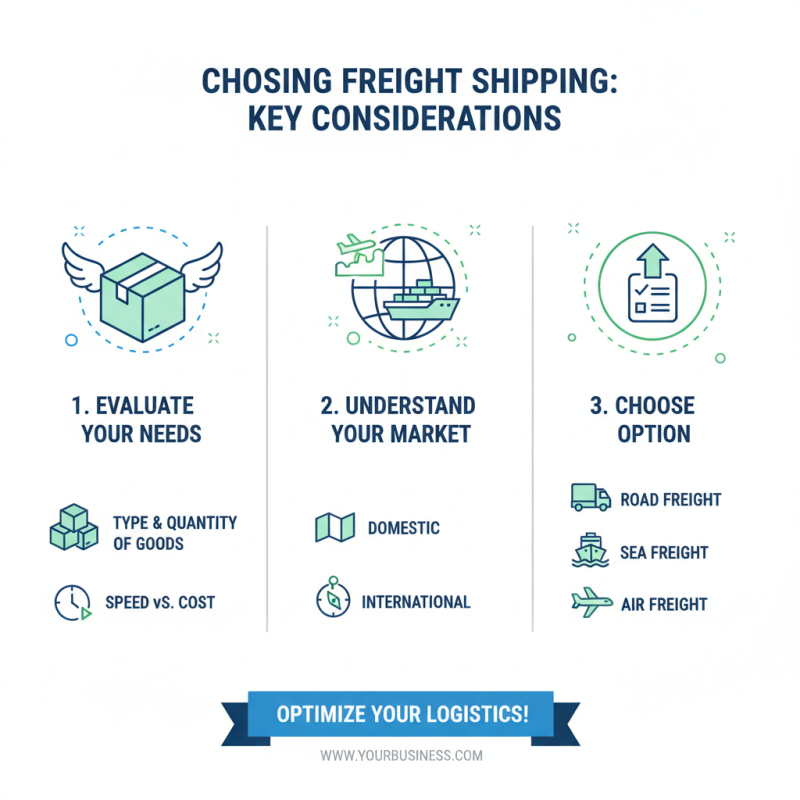
Consider the nature of your products. Are they perishable or fragile? This detail shapes your choice. Standard shipping may be economical, but it could delay deliveries. Express options cost more, but they ensure quicker reach. Think about the trade-offs carefully.
Evaluate your target markets as well. Some regions may lack reliable services. This could lead to frustrations with late deliveries. Analyze your needs objectively. Mistakes in freight shipping can impact your bottom line. Reflect on your shipping requirements to make informed choices. Your business's reputation may depend on this decision.
Understanding Your Business Shipping Needs
Understanding your business shipping needs is crucial. According to a recent industry report, 67% of small businesses struggle to choose the right freight option. This challenge often stems from a lack of clarity in their shipping requirements. Businesses must assess their shipping volume and frequency to identify the best method.
Volume plays a significant role in cost and efficiency. For example, companies shipping large quantities may benefit from container shipping, which can lower per-unit costs. Meanwhile, businesses that ship smaller quantities more frequently might find express shipping more appropriate. It’s essential to consider transit times as well. A 2022 survey revealed that 32% of businesses prioritize speed over cost. However, this might not always be sustainable.
Understanding your target market can also shape your shipping choices. Certain regions may require specific shipping solutions, which can complicate decisions. An inflexible shipping strategy might lead to lost customers. Adjusting to client needs is vital. Sometimes, sticking too rigidly to a single shipping option can result in missed opportunities and increased costs. Reflecting on these factors can guide better decision-making in freight shipping.
Types of Freight Shipping Options Available
When choosing a freight shipping option, understanding the types available is crucial. There are several methods, including air freight, ocean freight, and ground transportation. Each comes with unique benefits and drawbacks. For instance, air freight is fast but expensive, while ocean freight is more economical but slower. Data from the Freightos International Freight Index shows that air freight prices rose by 50% over the past year, making it less viable for cost-sensitive shipments.
Ground transportation offers flexibility and can reach remote areas, yet it is impacted by traffic delays. In fact, a report by the American Transportation Research Institute indicates that traffic congestion costs the trucking industry over $74 billion annually. This can lead to unexpected shipping times. It's essential to weigh these factors based on your business needs.
**Tip**: Always evaluate shipping volume. High volumes may warrant a shipping contract for better rates.
Consider trying a mixed approach. Using more than one method can help optimize costs and delivery times. However, this may complicate logistics, which can be a flaw.
**Tip**: Track shipping metrics closely. Delays in one method can cascade through your supply chain, affecting overall performance.
Factors to Consider When Choosing a Freight Option
When choosing a freight shipping option, several factors come into play. The type of goods being shipped is crucial. Perishable items might require refrigerated transport. In contrast, bulk materials can be sent using less costly methods. According to recent industry reports, around 25% of companies choose transport based on their goods' nature. Understanding these specifications helps ensure proper handling.
Cost is another significant factor. Freight expenses can vary widely depending on the method chosen. Air freight is often more expensive but faster than sea freight. A report from the Freight Analysis Framework indicates that small businesses often underestimate shipping costs, affecting profit margins. Many don’t account for hidden fees, which can lead to unexpected expenses.
Delivery speed is important too. In today’s market, speed can be a competitive edge. However, the trade-off might be higher costs. Businesses must evaluate their urgency against their budget. Striking a balance is often challenging. According to Logistics Management, around 40% of shippers struggle with this decision. Understanding how these factors interplay is key to making informed choices.
Freight Shipping Options Analysis
This chart displays the average cost per ton for various freight shipping options, helping businesses choose the right shipping method based on budgetary considerations.
Evaluating Cost vs. Service Reliability
When choosing a freight shipping option, balancing cost and service reliability is crucial. A recent industry report indicated that 70% of businesses prioritize reliability over lower prices. Delays can result in significant financial losses. If shipments are not on time, customer satisfaction plummets. A missed delivery can lead to lost revenue, especially for time-sensitive products.
Cost efficiency is essential, but it shouldn’t outweigh the need for dependable service. For instance, a cheap shipping method might save money upfront, but poor performance can lead to larger issues down the line. Data shows that 20% of expedited shipments fail to meet their deadlines. This creates a ripple effect, impacting inventory levels and future sales.
Ultimately, companies must analyze their unique needs. Choosing a cost-effective option might be tempting but can lead to challenges. Can your business afford disrupted supply chains? How will delays affect customer relationships? Balancing these elements is vital for long-term success. Every decision carries weight, and a thorough evaluation is key.
How to Choose the Right Freight Shipping Option for Your Business? - Evaluating Cost vs. Service Reliability
| Shipping Option |
Cost per 100 lbs |
Transit Time (Days) |
Service Reliability (%) |
Best For |
| Ground Shipping |
$100 |
5-7 |
90% |
Domestic Deliveries |
| Air Freight |
$500 |
1-3 |
98% |
Urgent Deliveries |
| Ocean Freight |
$200 |
10-20 |
85% |
International Shipping |
| Rail Freight |
$150 |
7-14 |
88% |
Heavy Bulk Shipments |
| Express Shipping |
$400 |
1-2 |
95% |
Time-sensitive Packages |