How to Choose the Right Freight Shipping Options for Your Business?
In an increasingly globalized economy, choosing the right freight shipping options is critical for businesses. Statistics show that logistics costs can account for up to 10% of a company's total expenses. Freight shipping decisions directly impact delivery speed, customer satisfaction, and overall profitability.
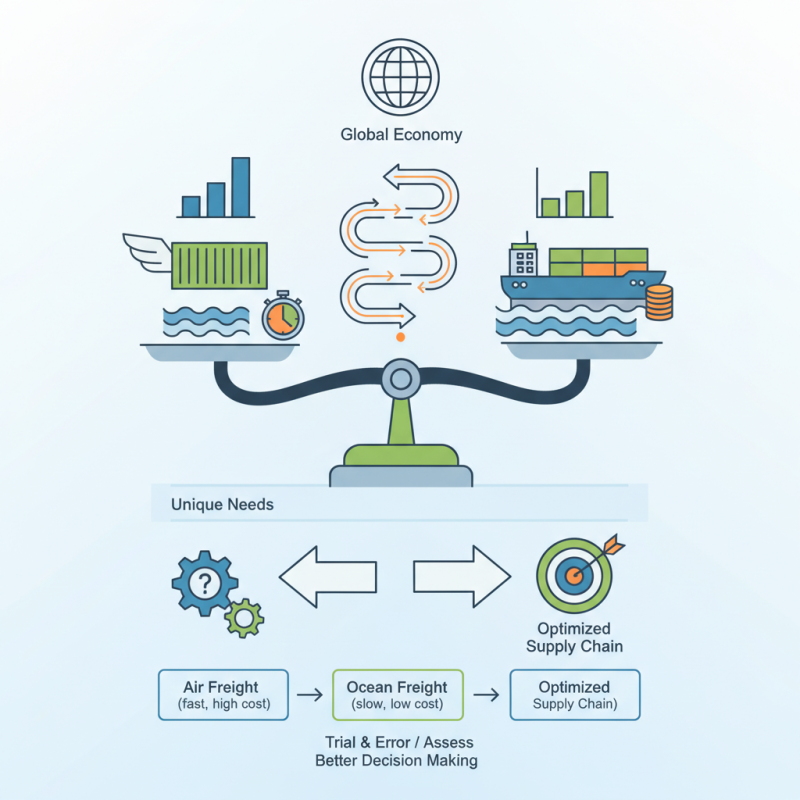
There are multiple factors to consider, such as shipping modes, costs, and reliability. Air freight might be faster but usually comes with higher costs. On the other hand, ocean freight offers cost efficiency but may lead to delays. According to industry reports, 60% of businesses struggle to balance cost and delivery time in shipping choices.
Reflecting on these challenges, it becomes essential to regularly assess supply chains. Businesses must seek to understand their unique needs and how they align with freight shipping options. Finding the perfect fit may require trial and error, but this process is necessary for growth. Understanding these complexities can lead to better decision-making and improved operational efficiency.
Understanding Different Freight Shipping Methods and Their Costs
When selecting freight shipping options, understanding various methods is crucial.
There are several choices available, each with unique costs.
Air freight is fast but often expensive. It suits urgent shipments.
Ocean freight is economical for large volumes. However, it takes longer.
Ground shipping is versatile and generally cost-effective for domestic deliveries.
Tips: Consider your delivery timeline. If time is not an issue, ocean freight may save you money.
Analyze your shipment size. Small, frequent shipments might be better suited for air freight.
Additionally, each shipping method has its own intricacies. Hidden fees can arise with customs and handling.
Be aware of the total cost involved. Research potential delays, especially in peak seasons.
Tips: Always track your shipments for potential issues. This helps in managing expectations.
Maintain a good relationship with your carrier. It can lead to better service and pricing over time.
Reflect on past choices. Learning from experience is key to optimizing future shipping strategies.
Factors to Consider When Choosing Freight Shipping Options
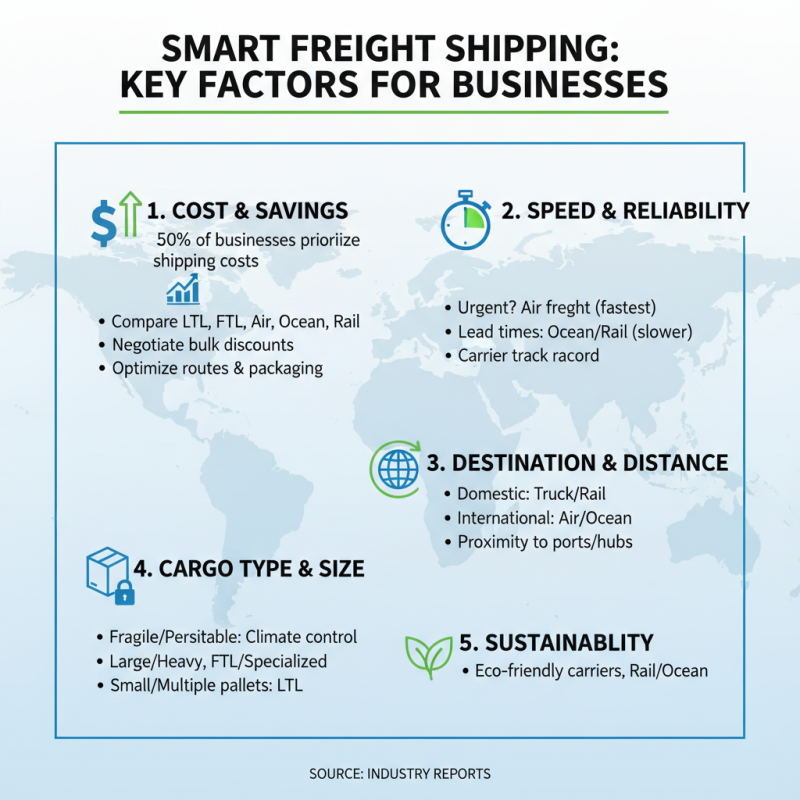
When selecting the right freight shipping options for your business, several key factors come into play. The first is cost. According to industry reports, nearly 50% of businesses cite shipping costs as their primary concern. Evaluating different freight carriers can yield significant savings.
Consider transit time as another crucial element. Shippers often face trade-offs between cost and speed. A report from Logistics Management indicates that 70% of consumers expect same-day delivery, which increases pressure on businesses. Using express freight for urgent shipments can keep customers satisfied, but it might not always be feasible for every budget.
Tips: Always assess your shipping volume and frequency. This helps in negotiating better rates with carriers.
Lastly, don’t overlook the importance of service reliability. A provider's performance metrics should inform your choice. Industry standards suggest that a 95% on-time delivery rate is a benchmark. If a carrier consistently underperforms, it may lead to unhappy customers.
Tips: Incorporate real-time tracking to improve transparency. This builds trust with your clientele.
Evaluate these factors based on your business needs. Sometimes, choosing the cheapest option can backfire if it compromises quality or reliability.
Analyzing Delivery Speed vs. Cost in Freight Shipping Choices
Choosing the right freight shipping option requires a careful balance of delivery speed and cost. According to logistics reports, faster shipping can increase costs by up to 30%. Many businesses struggle with this trade-off. A report by Transport Topics states that 60% of shippers prioritize lower costs over quick delivery. This can lead to longer transit times, affecting customer satisfaction.
Delays can impact inventory management and sales. For example, goods stuck in transit can lead to stockouts. A study from the Council of Supply Chain Management Professionals revealed that 45% of companies experienced revenue loss due to shipping delays. In contrast, premium services promise quicker delivery but may not always guarantee reliability. Many companies find themselves paying more without seeing a significant benefit.
Businesses need to analyze their specific needs. Some products are more sensitive to delays. Perishables, for instance, require fast delivery. However, other goods can endure longer transit times. A reevaluation of shipping methods may reveal potential inefficiencies. Striking a balance is critical for operational success. Understanding your customers’ needs and aligning your shipping strategy can be complex but is essential for growth.
Evaluating Carrier Reliability and Compliance in Freight Shipping
Choosing the right freight shipping option is crucial for any business. Evaluating carrier reliability and compliance can seem daunting. However, understanding key metrics can lead to better decisions. According to a recent industry survey, 41% of shippers reported that carrier reliability significantly affects their overall supply chain efficiency. This statistic highlights the importance of selecting a trustworthy partner.
Tips for evaluating carrier reliability include assessing on-time delivery rates and customer feedback. Look for carriers that maintain at least a 95% on-time performance. This metric ensures that your shipments arrive as scheduled, preventing costly delays. Compliance is another critical factor. A study indicated that about 25% of carriers fail compliance checks, which can lead to regulatory issues. So, check their safety records and certifications.
Being overly focused on costs can backfire. Some low-cost carriers may lack reliability. Poor delivery can damage customer relationships. Take time to research and analyze options. It’s about balancing cost with service quality. If a carrier's promises seem too good to be true, they often are. Rely on data and facts to guide your choices. Aim for a dependable shipping strategy that aligns with your business goals.
The Impact of Freight Shipping on Supply Chain Efficiency and Performance
Freight shipping plays a crucial role in the supply chain. It directly affects how quickly products reach customers. A delay in shipping can disrupt inventory levels, leading to dissatisfied customers. Efficient freight options help maintain a smooth flow.
Choosing the right shipping method can be complex. Each option has its pros and cons. For instance, air freight is fast but expensive, while sea freight is cost-effective but takes longer.
Businesses need to weigh these factors carefully. Sometimes, companies may overlook the importance of reliable carriers. Unexpected delays can result from rushing these decisions.
Incorporating technology can enhance efficiency. Real-time tracking provides insight into shipping processes, yet not all businesses use these tools effectively. There are still gaps that require improvement. Understanding the impact of freight on supply chain performance is essential. This awareness leads to better decisions and stronger customer relationships.