
China Top 10 Garment Label Suppliers? The question matters because a small label can influence product identity, compliance, comfort, and perceived quality. China remains a major global textile and apparel manufacturing hub, according to the World Trade Organization’s World Trade Statistical Review 2024. Its supplier base includes woven labels, printed care labels, heat-transfer labels, hangtags, badges, and RFID-ready solutions.
Material choices deserve closer attention. The Textile Exchange Materials Market Report 2024 states that polyester represented approximately 59% of global fiber production in 2023. That figure helps explain the demand for durable synthetic labels, recycled polyester options, and low-impact finishing processes. Meanwhile, the State of Fashion 2025 report from McKinsey and The Business of Fashion highlights continued pressure on brands to improve efficiency, traceability, and responsible sourcing. Labels now carry more than a logo.
This guide examines ten China-based Garment Labels suppliers through practical criteria: product range, sampling speed, material transparency, production capacity, quality control, export experience, and communication reliability. Public certifications may support evaluation, but they should never replace factory audits or sample testing. Ask for wash tests. Check edge softness. Compare colorfastness.
The ranking is not absolute. Supplier capabilities change, and online information can be incomplete. That is worth admitting. A factory with excellent woven-label production may not perform equally well with silicone badges or RFID integration. Buyers should confirm current equipment, minimum order quantities, certifications, and lead times directly. The following selection offers a useful starting point, not a final purchasing decision.
Garment labels are small, but they carry important information. They identify fiber content, care instructions, size, origin, and production details. A well-made label helps customers wash a garment correctly and understand what they are buying. It also gives manufacturers a clear space for product identification.
Comfort matters too. A rough edge can irritate the neck after several hours of wear. A faded print can make care instructions unreadable. These details may appear minor, yet they affect trust, returns, and repeat orders.
In practical production, label material, weave density, ink quality, cutting method, and attachment strength should be checked before bulk manufacturing.
Good suppliers usually provide samples, confirm measurements, and explain production limits clearly. Buyers should compare thread quality, color accuracy, wash resistance, and delivery consistency. Testing labels after repeated washing is useful, especially for sportswear, children’s clothing, and work garments. Ask for documentation when required. Do not rely only on attractive samples.
Mistakes still happen.
A label may show the wrong size or care symbol. That can damage a product’s credibility and create avoidable waste. I have found that a simple approval sheet, signed before production, prevents many errors. It should include artwork, dimensions, materials, colors, folding style, quantity, and packaging instructions. Labels do not sell the entire garment, but they quietly support safety, clarity, and professional quality.
China’s top ten garment label suppliers should not be judged by search rankings alone. A strong evaluation begins with production evidence. Request recent samples, material specifications, minimum order quantities, and clear lead-time records. Inspect woven edges, print sharpness, color consistency, and wash durability. A reliable supplier should explain its quality-control process without vague promises.
Tips: Ask for a small trial order. Compare the approved sample with delivered labels. Check factory capacity, worker safety practices, material traceability, and export documentation. Confirm whether production is handled in-house or through undisclosed subcontractors. Pricing matters, but unusually low quotes may signal thinner materials, weak inspection, or unstable delivery. Communication is also practical evidence. Replies should be specific, timely, and supported by photos or test reports.
A professional supplier can discuss applicable textile standards and packaging requirements for your target market. Verify certificates independently when possible. Do not rely on a single sales contact. A second conversation with production staff may reveal useful details. Even experienced buyers can miss small differences in thread density or adhesive strength. That is worth admitting. Build a written approval process, including tolerances, replacement terms, and inspection points. The best supplier is not always the cheapest or most visible; it is the one that repeatedly delivers consistent labels under documented conditions.
| No. | Evaluation Dimension | What to Check | Practical Benchmark | Recommended Evidence |
|---|---|---|---|---|
| 1 | Product Range | Review the supplier’s ability to produce woven labels, printed labels, care labels, size labels, hangtags, patches and heat-transfer labels. | A suitable supplier should support the label formats, materials, finishes and attachment methods required by the garment program. | Current product catalog, material list, sample set and written confirmation of production capabilities. |
| 2 | Material Compliance | Check whether threads, inks, adhesives, coatings and base fabrics meet applicable chemical and product-safety requirements. | Materials should be traceable and suitable for the destination market, especially where restricted-substance rules apply. | Recent third-party test reports, material declarations, safety data and restricted-substance compliance documents. |
| 3 | Artwork Accuracy | Evaluate color matching, text clarity, font reproduction, logo proportions, edge quality and sample approval procedures. | Production should begin only after a documented digital or physical pre-production approval. | Pre-production samples, color standards, artwork approval form and revision records. |
| 4 | Minimum Order Quantity | Compare minimum order quantities for different label types, sizes, colors and design variations. | MOQ should match the buyer’s production volume; smaller orders may involve higher unit costs or setup charges. | Written quotation showing MOQ, setup fees, sampling charges and pricing by quantity tier. |
| 5 | Lead Time and Capacity | Assess sample lead time, bulk production time, peak-season capacity and the ability to handle repeat orders. | The supplier should provide separate timelines for sampling, approval, production, inspection and dispatch. | Production schedule, capacity statement, order history with sensitive information removed and on-time delivery records. |
| 6 | Quality Control | Verify inspection of dimensions, color, weave density, print quality, cutting, folding, adhesive strength and packaging. | A documented inspection process should cover incoming materials, in-process production and final shipment. | Quality-control plan, inspection checklist, defect classification, corrective-action records and retained production samples. |
| 7 | Wash and Wear Performance | Test colorfastness, dimensional stability, fraying, peeling, cracking, abrasion resistance and attachment durability. | Performance requirements should be agreed according to garment use, care instructions and the target market. | Laboratory test results, wash-test samples, test method, pass criteria and batch traceability. |
| 8 | Certifications and Audits | Confirm the validity and scope of management-system, social-compliance, environmental or recycled-material certifications. | Certificates should be current, issued to the actual manufacturing site and relevant to the ordered product. | Certificate copies, verification links or numbers, audit reports and factory-address confirmation. |
| 9 | Export and Packaging Support | Review export documentation, carton labeling, packing methods, shipping terms and ability to meet delivery instructions. | The supplier should clearly state packaging specifications, shipping responsibilities and required documents before order confirmation. | Sample packing list, commercial invoice format, carton specifications, shipping history and agreed Incoterms. |
| 10 | Communication and Cost Transparency | Assess response speed, technical understanding, quotation clarity, change control and after-sales handling. | A reliable supplier provides itemized pricing, identifies assumptions and documents all artwork, material and delivery changes. | Comparable quotations, written response history, payment terms, complaint procedure and approved purchase-order process. |
Note: The benchmarks above are practical procurement guidelines rather than rankings of specific companies. Actual requirements should be confirmed through samples, contracts, testing and factory verification.
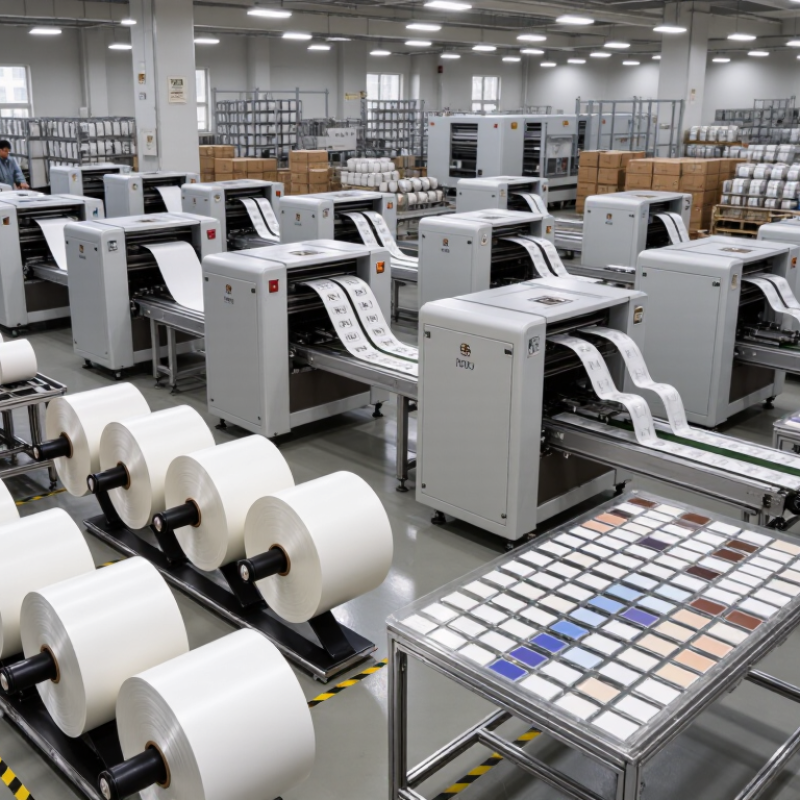
China’s Top 10 Garment Label Suppliers are recognized for reliable production, flexible customization, and strong export experience. The leading suppliers usually provide woven labels, satin care labels, printed tags, heat-transfer labels, and recycled fabric options. Their workshops often use barcode systems, color-control equipment, and automated cutting machines. These details reduce misplaced labels and uneven edges.
A dependable supplier should explain minimum order quantities, sampling fees, production time, and inspection methods before accepting payment. Ask for a physical sample. Digital previews can hide inaccurate colors.
For woven labels, check thread density and edge softness. For printed labels, request wash testing and colorfastness records. Some suppliers can produce small batches, while others focus on large factory orders. Neither option is automatically better.
In my experience, the strongest ten suppliers are not always the cheapest. They respond clearly, document revisions, and identify production risks early. A supplier may offer excellent material quality but struggle with urgent delivery. Another may ship quickly but provide fewer finishing choices. This ranking should remain flexible. Market conditions change, and one overlooked weakness can affect an entire clothing collection. Buyers should compare verified samples, factory capacity, communication quality, and post-production support before choosing a long-term partner.
China’s garment label suppliers provide many label types for clothing brands and manufacturers. Woven labels create a refined look for necklines, waistbands, and side seams. Printed satin labels suit care instructions and soft inner garments. Hang tags add product details, prices, sizing, and material information. Heat-transfer labels work well for sportswear and seamless designs. Rubber, leather, silicone, and cotton labels offer different textures and visual effects.
Customization usually begins with artwork, dimensions, thread colors, and finishing choices. Suppliers can produce folded labels, die-cut shapes, adhesive patches, and embroidered badges. They may also support recycled materials, organic cotton, and low-impact inks. Ask for a physical sample before approving bulk production. Digital images can hide rough edges, incorrect colors, or uncomfortable backing. Small details matter.
Reliable sourcing requires clear specifications and documented quality checks. Confirm material composition, colorfastness, washing performance, and production tolerances. Request a pre-production sample and compare it with the approved artwork. Packaging details deserve attention too. Mixed sizes can slow warehouse operations. In my experience, communication is often the real test of a supplier. A fast reply is not enough. The supplier should record changes accurately and explain limitations. A perfect first sample is not guaranteed. That is normal, but repeated mistakes require a careful review of the partnership.
This chart compares common garment label types by the number of widely available customization dimensions, including material, artwork, color, size, shape, folding, finishing, and attachment method. Woven, printed, heat-transfer, hangtag, leather or PU, silicone, and care-content labels are frequently used across apparel manufacturing and sourcing programs.
Selecting among China’s top garment label suppliers requires more than comparing price lists. Start with the label’s end use: woven labels need clean edges, printed labels need stable ink, and care labels need durable text. Ask for physical samples, not only digital proofs. Check color consistency under daylight, wash resistance, skin comfort, folding accuracy, and attachment strength. Small details matter.
Supplier evaluation should include factory audits, quality procedures, production capacity, minimum order quantities, and realistic lead times. Request material certificates and test reports for recycled fibers, organic fibers, or low-impact inks. Textile Exchange’s Materials Market Report 2024 reported global fiber production at 124 million tonnes in 2023, with growth projected toward 160 million tonnes by 2030. This makes traceable label materials increasingly important. However, a sustainability claim without batch records is weak evidence. Ask for documents.
Cost is not the whole decision. A cheaper label may create rework, delayed packing, or inconsistent branding. Compare total cost per approved unit. Review communication speed and correction handling during sampling. Keep one signed sample as the production standard. Do not skip this step. A supplier may pass one inspection and still struggle during peak season. That uncomfortable possibility deserves attention. Too much confidence in a single quotation can become an expensive mistake.
Fax: (920) 793-3818
