What Are the Top 10 Truckload Companies in China?

China’s truckload sector connects factories, ports, warehouses, and retailers across a vast and varied market. Choosing a carrier involves more than comparing quoted rates. Shippers also weigh lane coverage, available capacity, delivery consistency, cargo visibility, and the quality of local support. That matters.

This guide examines ten prominent truckload companies serving China, focusing on their operating models and practical strengths. Some are known for broad networks; others may suit particular corridors or shipment profiles. Company size alone does not guarantee a smooth delivery. An available truck, clear dispatch updates, careful handling, and workable claims procedures can matter more on a busy Monday than a national footprint. Small details count. Temperature needs, peak-season volumes, loading windows, and return-trip planning can also change what a good fit looks like. Ask how exceptions are escalated, not only how standard shipments are booked.

Because services and coverage can change, confirm current routes, equipment, pricing, and terms directly with each provider. Public rankings depend on the evidence and criteria used. Treat this list as a comparison starting point, not a universal verdict. That limitation deserves attention. The profiles ahead aim to make trade-offs easier to see. Your own lanes remain the most important test.
What Are the Top 10 Truckload Companies in China?

China’s Road Freight Baseline: 40.3 Billion Tonnes Moved in 2023

China’s road-freight baseline is immense: 40.31 billion tonnes moved in 2023. The Ministry of Transport reported this figure in its Statistical Bulletin on the Development of the Transport Industry in 2023. It also recorded about 7.39 trillion tonne-kilometres of road freight turnover. The two measures tell different stories. Tonnes show cargo volume; tonne-kilometres capture distance as well. A short regional haul and a long interprovincial trip do not place the same demands on capacity.

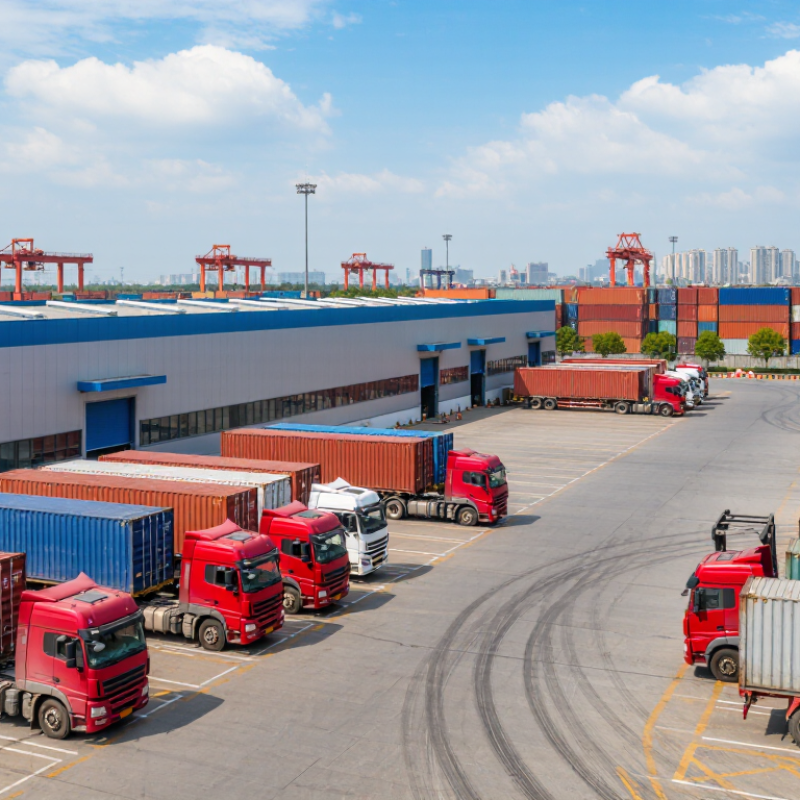
That scale becomes visible on ordinary roads: trucks queuing at industrial gates, loading bays, and highway service areas. China’s transport ministry reported a road network of roughly 5.44 million kilometres in 2023, including about 184,000 kilometres of expressways. That reach helps connect factories, wholesale markets, and smaller cities, but mileage alone does not guarantee smooth delivery. Congestion, empty return trips, and uneven demand can leave vehicles underused. The headline number is useful, but it hides those operational frictions.

For truckload operators, the baseline suggests a large, active market—not a simple ranking of the strongest companies. The Ministry’s figures describe aggregate freight activity, not each carrier’s market share or service quality. That distinction matters. A national total can set context, yet local lane density and dependable capacity often shape a shipper’s actual experience. The data leaves an important question open: how much of that enormous volume moves efficiently, rather than merely moving?

How to Compare the Top 10: Freight Scale, Network Reach, and Digital Capacity

Comparing the top 10 truckload companies in China requires more than ranking fleet size. The National Bureau of Statistics reported that road freight volume reached about 40.3 billion tonnes in 2023. That scale signals intense demand, but it does not show whether a carrier can secure trucks during peak harvests or keep departures reliable on a Tuesday night. Check operating fleet capacity, annual tonnage, and shipment density on the specific lanes you use. Scale alone misleads.

Network reach is better measured by serviceable routes, terminal locations, and the balance of outbound and return loads. The World Bank’s 2023 Logistics Performance Index gave China a score of 3.7, ranking it 19th overall; this is useful national context, not a carrier score. Digital capacity needs closer inspection: test shipment visibility, estimated arrival accuracy, electronic documentation, and how quickly dispatch teams resolve missed scans. That gap matters. Public disclosures are not standardized, so two carriers may count “coverage” differently. Ask for lane-level performance records, not just a map of dots. Compare the same measures across regions and shipment types.

What Are the Top 10 Truckload Companies in China? - How to Compare the Top 10: Freight Scale, Network Reach, and Digital Capacity

Comparison note: Company-level figures are not presented here because comparable, independently verified data for a named “top 10” ranking are not consistently disclosed. The scorecard below shows what to compare without inventing or implying unverified company results.

Comparison dimension Metric to compare How to interpret it Public-data status
1. Freight scale Annual road-freight volume (tonnes) and freight turnover (tonne-kilometres) Compare like-for-like annual figures; distinguish loads arranged from freight physically carried. National benchmark: China’s road freight volume was about 40.31 billion tonnes in 2023. Company totals are not consistently reported on the same basis.
2. Truckload focus Share of revenue or shipments from full-truckload services A higher truckload share makes a provider more directly comparable with truckload specialists than with parcel or less-than-truckload operators. Often not disclosed as a standardized, independently comparable figure.
3. Fleet model Owned trucks versus contracted or platform-connected trucks Separate owned-fleet capacity from partner capacity; a large connected-driver count is not the same as an owned fleet. Definitions vary. Check the reporting period and whether counts refer to registered, active, or dispatched vehicles.
4. Network reach Provinces, cities, service lanes, and operating depots covered Coverage counts are most useful when paired with shipment frequency and service availability on key origin-destination lanes. Company-reported coverage may use different definitions; verify whether locations are actively served.
5. Lane density Shipments or departures per lane per week Higher density can support more frequent departures, better backhaul matching, and more consistent capacity on core routes. Usually available only through company disclosures or customer-specific bids.
6. Cross-region capability Long-haul coverage, interprovincial service, and cross-border capability where relevant Confirm which services are operated directly and which depend on subcontractors or local partners. Service scope is company-specific and should be checked against current operating licenses and service terms.
7. Capacity reliability Tender acceptance, on-time pickup, on-time delivery, and cancellation rates Use the same service definitions and measurement window; request lane-level results rather than network-wide averages alone. Not reported in a uniform public format; validate through operational records and references.
8. Digital visibility Real-time tracking coverage, location-update frequency, and proof-of-delivery availability Assess the percentage of loads with usable tracking—not simply whether a tracking feature exists. Comparable coverage rates are generally not publicly standardized.
9. Digital execution Electronic booking, dispatch, documentation, invoicing, and payment workflows Compare the share of transactions completed digitally and the extent of integration with shipper systems. Feature descriptions are common; independently comparable adoption rates are less common.
10. Data and risk controls Carrier verification, insurance processes, exception management, and data-security controls Review documented procedures, audit results, and incident handling rather than relying on technology claims alone. Requires due diligence; public disclosures are not sufficient to establish operational performance.

Source note: The national road-freight benchmark is from China’s Ministry of Transport 2023 transport-industry statistical reporting. It is an industry-wide figure, not a company ranking. Request audited, consistently defined company data before assigning rank or comparing reported capacity.

Digital Freight Platforms: Full Truck Alliance, Lalamove, and Kuaigou Dache

Digital freight platforms are changing how truckload capacity is found across China. Shippers can post a load, compare available vehicles, and track a trip from a phone. Three widely discussed models include a large freight marketplace, an on-demand local delivery network, and a platform focused on matching trucks with smaller businesses. Each serves different needs. One may suit long-distance full loads, while another is better for same-day city deliveries. The distinction matters: a fast booking is not always the best fit for a heavy, time-sensitive shipment.

Tips: Before confirming, check the truck’s capacity, pickup window, unloading access, and quoted charges. Share clear loading details, including pallet count and site restrictions. Keep the booking and delivery records together. Small checks help.

Digital matching can reduce empty searching, but it cannot fix every operational problem. A driver may face a narrow warehouse entrance, a delayed loading dock, or a route change. Platform estimates also depend on accurate shipment information. Ask how support handles delays and disputes, and confirm payment terms before dispatch. These steps sound basic. They are easy to miss when a warehouse is busy. I would not treat app ratings as proof of dependable service; they are only one signal, and they may not reflect your particular route or cargo.

China Freight Volume by Transport Mode (2023)

Road transport accounted for the largest share of freight volume, highlighting the scale of the market served by truckload logistics.

Source: Ministry of Transport of China, 2023 Statistical Bulletin on the Development of the Transport Industry. Values are rounded.

Integrated Logistics Networks: SF Express, JD Logistics, Deppon, and ANE

China’s leading truckload networks compete through more than fleet size. Their advantage often comes from connecting long-haul trucks with local depots, sorting facilities, and last-mile delivery. A shipment of machine parts, for example, may leave a factory on a scheduled linehaul, pass through a regional hub, then move by a smaller vehicle to its destination. When these handoffs are coordinated well, customers gain clearer tracking and fewer idle hours.

Different operators build that system in different ways. Some combine parcel delivery experience with freight capacity; others link e-commerce warehouses, dedicated trucking, and regional distribution. Larger freight specialists may focus on scheduled routes and bulky shipments, while asset-light networks can connect independent carriers with digital booking and dispatch tools. The labels sound tidy. Actual service is not always.

For shippers, the useful comparison is practical: pickup reliability, damage handling, route coverage, and proof of delivery. Ask how a provider manages peak-season capacity and missed connections, not just how many trucks it lists. A detailed scan at a transfer depot can reassure customers, but it cannot replace careful loading. I would also check local service quality; national coverage does not mean every county performs equally.

Road-Freight Players: ZTO, YTO, and Yunda Express

China’s road-freight market includes large parcel networks that also move substantial volumes between regional hubs. Their express services are not identical to traditional truckload operations, but scheduled line-haul trucks connect sorting centers, cities, and local delivery routes. For shippers, that distinction matters.

At a busy hub, freight may arrive in wheeled cages, cartons, or palletized loads. Dispatch teams coordinate departures around cut-off times and available capacity. When shipments are consolidated well, trucks can leave fuller and routes become more efficient. Timing matters. A late arrival can disrupt the next connection, even when the road journey itself is short.

These networks can suit businesses sending frequent, standardized shipments across many regions. A company moving a single oversized load may need a different service, with clearer handling terms and direct capacity checks. Rates and transit times can vary by lane, season, and pickup location, so published service descriptions deserve careful review. I would not treat every parcel operator as a conventional truckload carrier; the categories overlap, but they are not interchangeable. That nuance is easy to overlook.