How to Choose the Right Flatbed Truck?
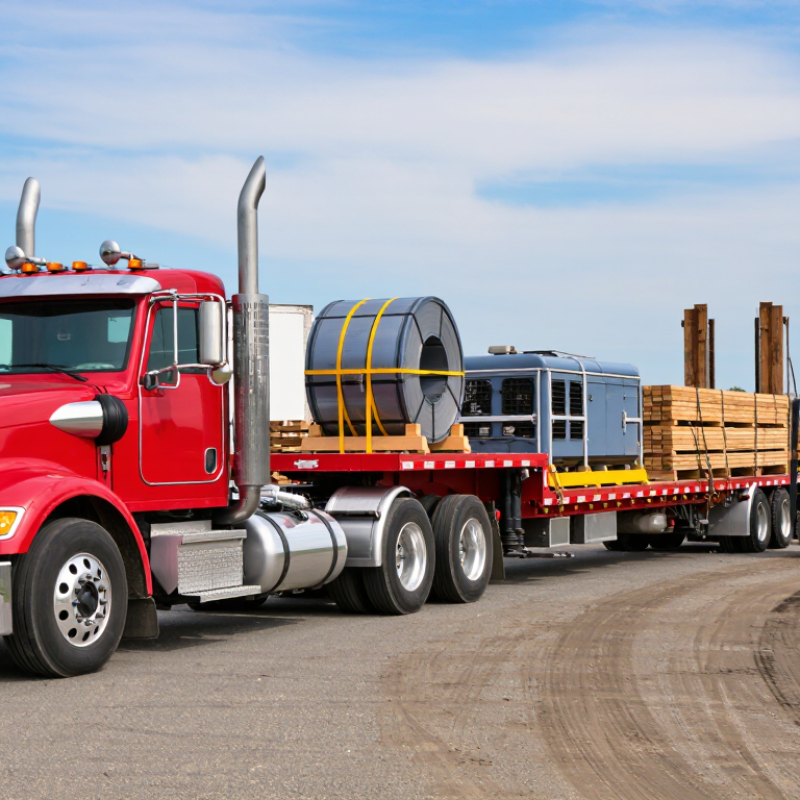
Choosing the right flatbed truck begins with the cargo, not the catalogue. A steel coil, skid-mounted generator, and bundled lumber place different demands on deck space, payload, and loading access. Small details matter: where the forklift can approach, whether the load needs tarping, and how much room remains for straps and edge protection. Sometimes the loading yard is muddy or cramped. A clean specification sheet will not show that.
Operating costs deserve equal attention. The American Transportation Research Institute’s 2024 report, An Analysis of the Operational Costs of Trucking, estimated the average marginal operating cost across trucking at $2.260 per mile in 2023. That is an industry-wide benchmark, not a flatbed-specific figure. Still, it shows why fuel economy, maintenance, driver time, and equipment utilization belong in the same calculation. A lower purchase price can lose its appeal when a truck spends days waiting for suitable freight. It can happen.
Before comparing models, define the work: typical load dimensions and weight, weekly mileage, route conditions, and loading methods. Then check the usable deck length and width, rated payload after equipment weight, axle configuration, and compatibility with the trailer and tractor. Consider how often crews handle tarps or specialized securement gear; those tasks affect both time and labor. No single setup fits every operation. The best choice is the one that safely handles recurring loads without paying for capacity or features the business rarely uses. Industry averages help, but your own dispatch and maintenance records should decide the final fit.
Define the Load: Payload, Cargo Dimensions, and Center of Gravity
How to Choose the Right Flatbed Truck?
Define the Load: Payload, Cargo Dimensions, and Center of Gravity
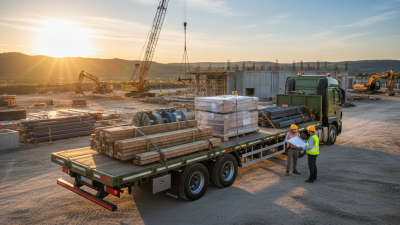
Start with the load, not the truck. Record the cargo’s actual weight, including pallets, packaging, and any equipment traveling with it. Then compare that total with the truck’s rated payload for its exact configuration. Check axle ratings too: a load can be below the overall limit yet place too much weight on one axle. Small details matter.
Measure length, width, and height at the widest points. Note anything that can shift or extend beyond the main cargo area. These measurements help you judge whether the deck offers enough usable space and room to position tie-downs. Allow space for protective materials and securement gear. A neat estimate can still miss a protruding handle or uneven pallet.
Center of gravity deserves equal attention. Keep dense items low and distribute weight evenly from side to side and across the axles. If the load is tall or unusually shaped, ask a qualified loading professional to review the plan. A scale check can reveal problems that visual inspection misses. Even careful estimates miss things. Recheck the numbers when cargo, packaging, or placement changes; the “usual” load is not always the same load.
Choose Deck Length: 48- and 53-ft Flatbeds Are Common U.S. Options
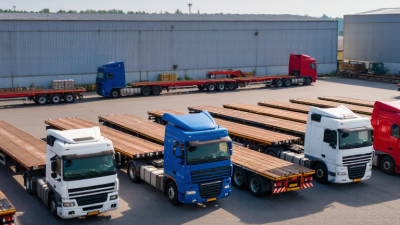
In the United States, 48- and 53-foot flatbeds are common choices. A 53-footer adds five feet, or about 10.4% more deck length. That space can fit longer steel sections, bundled lumber, or machinery that would overhang a shorter deck. Measure the actual usable deck, not just its advertised length; ramps, winches, and a front rack can affect loading space. Small details matter.
The American Trucking Associations’ American Trucking Trends 2024 estimates that trucks moved 11.18 billion tons of freight in 2023, or 72.7% of domestic freight tonnage. That broad freight mix makes cargo dimensions a practical starting point, though the report does not identify one ideal deck length. Compare the longest routine loads, how often they occur, and the loading space your routes provide. A longer deck may offer flexibility, but it cannot solve every constraint. Weight limits, axle placement, and securement needs still matter; sometimes the load reaches its weight limit before it uses the full deck. That is easy to overlook.
How to Choose the Right Flatbed Truck? — Choose Deck Length
A 53-foot deck provides about 42.5 square feet more surface area than a 48-foot deck when both are 8 feet 6 inches wide. These figures estimate deck area only; they do not indicate payload capacity or usable loading space.
Check Route Limits: 102-in Width and 13-ft-6-in Height on Key U.S. Routes
Choosing the right flatbed means checking the route before comparing deck length or payload. FHWA’s Federal Size Regulations for Commercial Motor Vehicles sets a 102-inch maximum width for vehicles on the National Network, excluding certain safety devices. That equals 8 feet 6 inches. A load that extends beyond the permitted width may need additional route-specific review.
Height is less uniform. Federal rules do not set one nationwide vehicle-height limit; state rules and posted structures matter. Treat 13 feet 6 inches as a screening benchmark, not a promise of clearance. Measure from pavement to the load’s highest point, including dunnage, tires, and any covering. Small margins matter. A bridge sign may reflect a lower clearance than the route’s general planning limit.
Before choosing a truck, compare its loaded height and width with state DOT clearance maps and route restrictions. FHWA’s National Bridge Inventory provides bridge data, but posted signs and current state guidance should govern the actual trip. A map can be outdated, and a familiar road can still have an unexpected low span. Build in a practical buffer, then confirm questionable crossings with the relevant transportation agency.
Compare Axles, Tie-Downs, and Deck Ratings with the Planned Load
A flatbed’s capacity is not a single number. Match the planned load to axle ratings, tie-down capacity, and the deck’s stated limits. Start with the load’s weight, footprint, and center of gravity. A compact steel plate can stress a small deck area more than evenly distributed lumber. Axle count alone does not establish capacity; compare each axle’s rating with actual loaded scale weights. Weigh twice. Choose a truck with room below its ratings, not one that only just meets them.
FMCSA’s cargo-securement rule requires aggregate tiedown working load limits of at least half the cargo’s weight. For a 10,000-pound load, that means at least 5,000 pounds of aggregate working load limit. That figure is a baseline, not a substitute for correct placement, sound anchor points, or suitable tiedown angles. Check the equipment labels and inspect straps, chains, and deck anchors for wear. Deck ratings also depend on load distribution and support spacing, so confirm whether the rating applies to a concentrated load or an evenly spread one. A rating chart can be easy to misread. I would verify unusual point loads with the truck’s documentation before loading.
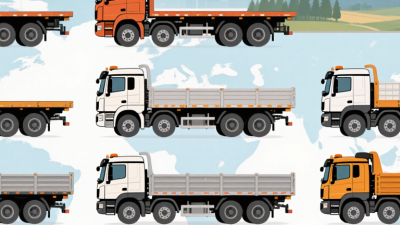
How to Choose the Right Flatbed Truck? - Compare Axles, Tie-Downs, and Deck Ratings with the Planned Load
| Typical setup |
Axle configuration |
Typical deck size |
Example planned load |
Tie-down planning example |
Deck rating and checks |
| Medium-duty flatbed truck |
2 axles: 1 front, 1 rear |
About 16–24 ft long; commonly around 8–8.5 ft wide |
4,000 lb machine on a compact skid |
At least 2,000 lb aggregate working load limit (WLL) as a basic planning target; for example, two 1,000 lb WLL direct tie-downs, correctly placed and attached to rated anchors. |
Check the body maker’s distributed-load and point-load ratings. Confirm the skid’s contact area and the truck’s GVWR and axle ratings. |
| Heavy-duty straight flatbed truck |
Typically 3 axles: 1 front, 2 rear |
About 20–26 ft long; commonly around 8–8.5 ft wide |
12,000 lb of palletized building materials |
At least 6,000 lb aggregate WLL as a basic planning target; for example, six 1,000 lb WLL direct tie-downs, subject to load shape, placement, and securement rules. |
Check both concentrated loads under pallet feet and total deck loading. Distribute cargo to keep axle loads within their ratings. |
| Tractor with flatbed semitrailer |
Commonly 5 axles total: 3 on tractor, 2 on trailer |
Typically 48–53 ft long; commonly around 8.5 ft wide |
24,000 lb of bundled lumber or similar long freight |
At least 12,000 lb aggregate WLL as a basic planning target; for example, twelve 1,000 lb WLL direct tie-downs. Add or adjust tie-downs for load length, blocking, and securement requirements. |
Verify the trailer’s deck and anchor ratings, cargo overhang, and axle-group weights. A five-axle configuration does not by itself establish legal payload. |
Planning note: These are representative configurations, not guaranteed vehicle capacities. Axle count, deck dimensions, and tie-down examples do not replace the specific vehicle and body ratings. Confirm the actual cargo weight and dimensions, GVWR, each axle rating, deck distributed and point-load limits, and anchor-point WLL before loading. The tie-down figures use a basic aggregate-WLL target of at least half the cargo weight; applicable securement rules, tie-down angles, equipment condition, and load characteristics may require a different arrangement or additional securement.