China Top Cargo Container Manufacturers and Suppliers?

China has become a major source of cargo container manufacturing, supported by large steel-processing networks and experienced export teams. Buyers can find standard dry containers, refrigerated units, open-top designs, and customized models for approved logistics applications. However, product names alone do not prove quality. A reliable comparison requires technical documents, factory evidence, and clear delivery records.

Leading manufacturers usually demonstrate control over corten steel, welding accuracy, coating systems, flooring, doors, and corner castings. Look for measured steel thickness, consistent weld seams, smooth door operation, and drainage details that prevent water accumulation. Factory visits can reveal production discipline more clearly than polished catalog images. Independent inspections and recognized certification records also deserve attention before payment or shipment.

Supplier selection is rarely perfect.

A dependable partner should explain specifications plainly, confirm production capacity, and provide traceable quality reports. Buyers should check whether the quoted price includes testing, painting, accessories, inland transport, and export preparation. Small omissions can become expensive later. Communication matters too, especially when drawings, tolerances, or delivery schedules change.

This guide examines China’s top cargo container manufacturers and suppliers through practical purchasing criteria. It considers manufacturing experience, material reliability, customization capability, inspection procedures, and after-sales support. The ranking should not replace independent due diligence. Even experienced buyers can miss weak points when schedules are tight. A careful shortlist, sample review, and documented contract can reduce avoidable risks while supporting a more reliable international supply decision.
China Top Cargo Container Manufacturers and Suppliers?

China’s Cargo Container Manufacturing Industry

China Top Cargo Container Manufacturers and Suppliers?

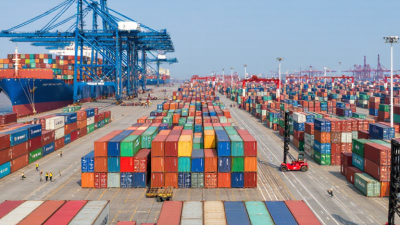
China’s cargo container manufacturing industry supports a large share of global maritime logistics. UNCTAD’s Review of Maritime Transport 2024 states that ships carry over 80% of world merchandise trade by volume. This demand keeps Chinese factories focused on dry containers, refrigerated units, tank containers, and specialized equipment. Production clusters benefit from steel supply, automated welding, port access, and experienced inspection teams. However, low prices alone do not prove quality.

A reliable supplier should provide material certificates, welding records, dimensional reports, and coating data. Buyers should also verify compliance with ISO 668, ISO 1161, and the International Convention for Safe Containers. During inspection, check corner castings, door alignment, floor moisture, and roof seams. Small defects can become expensive after months at sea. The World Bank’s Logistics Performance Index 2023 highlights the importance of shipment reliability, not only transport speed. This point is often underestimated. A container that leaves the factory late can disrupt an entire booking schedule.

Tips: Ask for production photographs, independent inspection, and a clear replacement policy. Compare steel thickness and corrosion protection, not just quotations. Request serial-number traceability for every unit. One limitation remains: public industry statistics rarely separate new containers from repaired or converted units. Buyers should therefore treat market estimates carefully and confirm figures directly with suppliers.

Main Types of Cargo Containers Made in China

China’s cargo container industry produces several practical designs for different transport conditions. Standard dry containers remain the common choice for cartons, machinery, furniture, and packaged materials. They usually use weather-resistant steel, wooden floors, locking bars, and reinforced corner castings. Common lengths include 20 and 40 feet, while high-cube models provide extra internal height. Details matter.

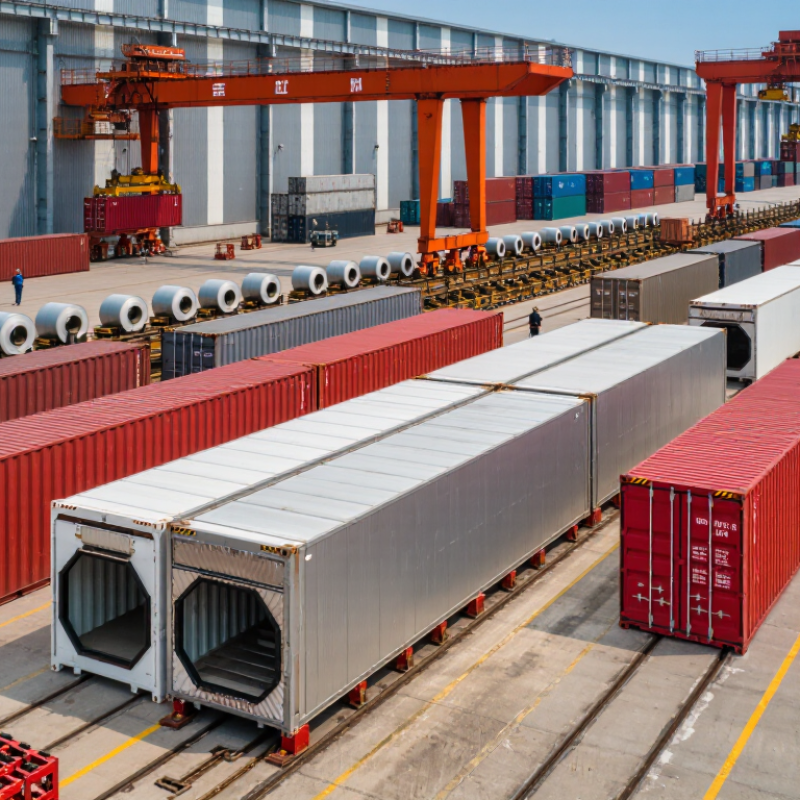
Refrigerated containers protect temperature-sensitive food, pharmaceuticals, and other approved goods. Insulated walls, cooling units, airflow channels, and digital controls help maintain stable conditions. Open-top containers suit tall machinery or cargo loaded by crane. Their removable roof creates useful loading space. Flat-rack containers carry heavy or oversized equipment, using fixed or foldable end walls. Tank containers handle permitted liquids and gases, with stainless steel shells, protective frames, valves, and pressure controls. The wrong type creates delays.

In practical procurement, container selection should match cargo weight, dimensions, route, and handling equipment. A dependable supplier should verify weld quality, door seals, floor strength, coating thickness, and container dimensions. Refrigerated models also need performance testing under realistic temperatures. Test reports, material records, inspection photographs, and clear maintenance guidance improve purchasing confidence. No container is perfect. Some specifications look impressive but offer little value for ordinary cargo. Buyers should question unnecessary customization and confirm applicable international safety requirements before production. Surface finish can also vary slightly between batches, so acceptance criteria should be written clearly.

Leading Chinese Cargo Container Manufacturers and Suppliers

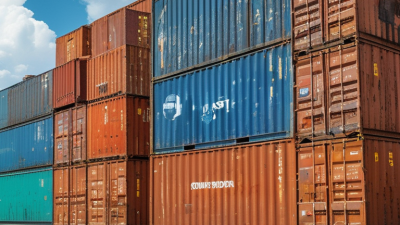
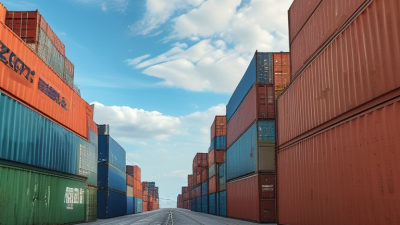
Leading Chinese cargo container manufacturers and suppliers serve global shipping, logistics, construction, and storage needs. Their product ranges commonly include dry freight containers, open-top units, flat racks, and customized equipment. Experienced suppliers usually provide drawings, material specifications, production photos, and inspection records before shipment. Buyers should check steel grade, corner casting accuracy, weld penetration, door alignment, and floor load capacity. Small defects can create major delays.

A reliable manufacturer should explain its quality process clearly. This includes incoming material checks, dimensional testing, leak inspections, coating evaluation, and final loading supervision. Ask for traceable serial numbers and applicable international safety approvals. Factory audits are useful, but they are not perfect. A clean workshop does not guarantee consistent production. Sample inspection matters more than polished presentations.

Container pricing also depends on steel thickness, paint system, fittings, freight distance, and customization. The lowest quotation may exclude testing, inland transport, or replacement parts. Request a detailed commercial offer with delivery terms and warranty conditions. Communication is another practical test. Strong suppliers answer technical questions directly and flag design risks early. Some suppliers may promise short lead times, yet production schedules can shift during peak demand. Buyers should confirm capacity, payment milestones, packaging, and pre-shipment inspection in writing.

China Top Cargo Container Manufacturers and Suppliers — Standard Cargo Container Capacity Profile

The chart compares the typical nominal internal volume of widely used ISO dry cargo container types commonly supplied by Chinese manufacturers. Capacity figures are approximate and may vary slightly according to construction design, wall thickness, doors, and fittings. The container categories and dimensional conventions are based on commonly applied ISO 668 specifications.

How to Evaluate Chinese Container Suppliers

Choosing Chinese cargo container suppliers requires more than comparing quotations. UNCTAD’s Review of Maritime Transport reports that over 80% of global merchandise trade moves by sea. That scale makes container quality a supply-chain issue, not just a purchasing detail. Ask for ISO 668 and ISO 1496 compliance records, recent inspection reports, and CSC-related documentation. Check steel specifications, welding procedures, floor treatment, door gasket quality, and corrosion protection. A factory video is useful, but it is not proof.

Request a sample unit or conduct an independent pre-shipment inspection. Inspect corner castings, roof seams, locking bars, and internal moisture marks. Compare the declared tare weight with the actual weight. The World Bank’s Container Port Performance Index shows how delays can vary sharply between ports, so evaluate the supplier’s export port, loading process, and average lead time. Include production capacity, replacement terms, packaging, and Incoterms in the contract. The lowest price can become expensive after rework, storage, and missed vessel schedules. I still treat the first quotation as a hypothesis, not evidence.

Tips: Visit the factory when possible. Speak with two recent customers. Request batch photos with dates and container numbers. Verify paint thickness with a gauge. Use a third-party inspector for the first shipment. Keep every specification in writing, because verbal promises often disappear under schedule pressure. A spreadsheet helps, but it can hide small defects. Examine the metal yourself.

China Top Cargo Container Manufacturers and Suppliers? - How to Evaluate Chinese Container Suppliers

No. Evaluation Dimension Factual Benchmark or Requirement Evidence to Request Why It Matters Suggested Weight
1 Applicable International Standards Dry freight containers should be designed and tested according to ISO 1496-1. Corner fittings are generally specified under ISO 1161. Technical drawings, test reports, inspection records, and the applicable standard edition. Confirms structural compatibility with intermodal handling equipment and international transport practices. 15%
2 CSC Safety Approval Containers used in international sea transport require a valid CSC safety approval plate under the International Convention for Safe Containers. A sample CSC plate, approval number, issuing authority, and periodic examination procedure. A missing, inaccurate, or expired approval can prevent lawful use in international shipping. 15%
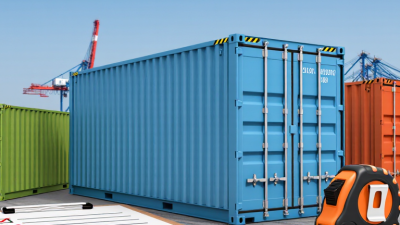
3 Standard Dimensions Typical external dimensions are approximately 6,058 × 2,438 × 2,591 mm for a 20-foot standard container and 12,192 × 2,438 × 2,591 mm for a 40-foot standard container. A 40-foot high-cube container is approximately 2,896 mm high. Approved dimensional drawings, measured inspection report, and dimensional tolerances. Correct dimensions are essential for vessel slots, rail transport, chassis compatibility, and warehouse planning. 10%
4 Payload and Gross Weight The maximum gross mass is product-specific and must be confirmed on the CSC plate. Many common ISO dry containers use a maximum gross mass of 30,480 kg, but the permitted payload is lower after tare weight. CSC plate, certified tare-weight record, payload calculation, and load-distribution instructions. Prevents overloading, regulatory violations, and unsafe axle or lifting loads. 10%
5 Material and Corrosion Protection Weathering steel is commonly used for container construction. The specification should identify steel grade, thickness, welding method, surface preparation, primer, and topcoat system. Material certificates, coating specification, paint-process records, and salt-spray or adhesion test results where required. Material and coating quality affect service life, water resistance, and maintenance cost. 10%
6 Floor and Interior Construction A conventional dry container commonly uses a marine-grade plywood floor installed over steel cross members. The exact floor load rating, board thickness, and treatment must be stated in the specification. Floor material certificate, load-test procedure, waterproofing details, and chemical-treatment documentation where applicable. The floor is exposed to concentrated forklift loads, moisture, abrasion, and cargo-related contamination. 10%
7 Door, Gasket, and Water-Tightness Door locking bars, cams, hinges, seals, and door-frame welds should operate smoothly and prevent rainwater ingress under the agreed test method. Door-cycle records, gasket material specification, water-spray test results, and pre-shipment inspection photographs. Poor door sealing can damage cargo and create recurring repair costs. 10%
8 Quality Management System ISO 9001 certification is not a substitute for product testing, but it provides evidence of a documented quality-management system and controlled production processes. Valid certificate, certification scope, issuing body, audit status, and factory quality manual or inspection plan. Documented processes improve traceability, consistency, corrective action, and complaint handling. 8%
9 Factory Capacity and Traceability The supplier should be able to identify raw materials, welding batches, paint records, inspection stages, and final container serial numbers. Factory audit, production schedule, equipment list, batch records, serial-number system, and capacity evidence for the requested quantity. Traceability helps control quality and resolve defects without relying only on supplier assurances. 7%
10 Inspection and Acceptance Plan The purchase contract should define inspections for dimensions, welds, coating, doors, floor, markings, CSC documentation, and water-tightness before shipment. Inspection and test plan, approved samples, defect classification, acceptance criteria, and independent inspection option. Clear acceptance criteria reduce disputes and make supplier performance measurable. 5%
11 Export Documentation and Markings The container should have correct identification markings, including the owner or operator code, equipment identifier, check digit, size/type code, and relevant safety information. Marking layout, ISO 6346 coding information, packing list, commercial invoice, certificate of origin where required, and shipping documents. Correct documentation supports customs clearance, asset tracking, and logistics-system integration. 5%
12 Commercial Terms and After-Sales Support Compare total landed cost, payment terms, production lead time, spare-parts availability, warranty scope, claim-response time, and delivery responsibilities under the agreed Incoterm. Formal quotation, warranty terms, Incoterm, production schedule, reference projects without confidential customer data, and service-contact details. The lowest unit price may not provide the lowest total cost over the container’s service life. 5%
Total Suggested Evaluation Weight 100%
Scoring method: Score each dimension from 1 to 5, multiply the score by the suggested weight, and compare suppliers only after verifying certificates, samples, factory records, and pre-shipment inspection results.

Quality Standards, Certification, and Export Services

China’s cargo container manufacturers serve a demanding global market. UNCTAD’s Review of Maritime Transport 2024 reports that over 80% of world merchandise trade by volume moves by sea. This makes structural reliability essential. Buyers should request compliance with ISO 668 for container dimensions and ISO 1496-1 for strength and testing requirements. Each unit should show traceable steel records, weld inspection results, coating thickness, and water-tightness checks.

Certification matters, but paperwork is not enough. Containers used in international transport normally require a valid CSC safety approval plate under the IMO’s container safety framework. Suppliers should also maintain an ISO 9001 quality management system, although this certificate does not guarantee every finished container. A factory audit can reveal more: uneven weld beads, weak door seals, poor drainage, or paint applied over surface rust. Small faults become expensive at ports.

Export service quality deserves equal attention. Reliable suppliers prepare commercial invoices, packing lists, certificates of origin, inspection reports, and shipping documents accurately. They should explain delivery terms, loading plans, customs requirements, and after-sales procedures before production begins. The World Bank’s Logistics Performance Index 2023 highlights the importance of shipment reliability and supply-chain visibility. Digital serial-number records can support that visibility. Still, delays happen. I would require pre-shipment inspection and photographic evidence. A perfect quotation can hide imperfect execution.